
This may well be the coolest thing I've ever seen, early military acoustic detection technology in the form of gigantic card and paper ears.
http://little-people.blogspot.com/

A lovely project involving handpainting tiny people and leaving them around London.
Interesting artist who uses living animals in her work, a regular collaborator with Ken Rinaldo. Much of her work attempts to model the future possibilities of genetic engineering.
Link to her webpage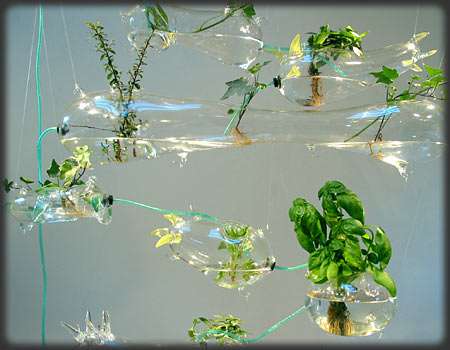
I know I'm not meant to help you guys with tech stuff, but so many of you have asked me about this that I thought I'd post it up.
It a tutorial on the Kirupa website that shows you how a php script can allow your flash movies to save information to a file on your server. So now you can create flash content that develops with every visit.
http://www.kirupa.com/developer/mx/hitcounter.htm
Just thought I'd stick this up- its not really relevant to most of you- but some of you are looking at making organisms with interfaces/bodies.

Theres a ton of interesting uses of simple sensors arrays in the PDF available on this page.
Yenova Chen, the games designer who created Flow, has also made a game called cloud- I'm just posting it here becuase the graphics are quite original and might help some of you to think about how your going to present your organisms/ enviroments etc..... Heres a link to his flickr photoset documenting it.
http://www.flickr.com/photos/jenovachen/sets/382166/
A nice example of drawing living creatures in flash.
http://www.jonathanyuen.com/
http://intihuatani.usc.edu/cloud/flowing/black.htmlA few of you have been looking at this very nice game. The design comes from simple first principles, but has been developed into a complex system. Careful-its pretty hypnotic.
Richard Dawkins, genetic theorist, created the biomorph algorithm in his book "The Blind Watchmaker", in order to explain his theory of genetic determinism. Although they can look very complex, the images that the program creates actually have a very simple set of instructions.
An implementation of the algorithm in a java applet is here.
http://www.phy.syr.edu/courses/mirror/biomorph/Each biomorph in the Blind Watchmaker algorithm has the following 15 genes:
genes 1-8 control the overall shape of the biomorph,
gene 9 the depth of recursion,
genes 10-12 the colour of the biomorph,
gene 13 the number of segmentations,
gene 14 the size of the separation of the segments,
gene 15 the shape used to draw the biomorph (line, oval, rectangle, etc).
These kind of drawing rules could be very easily put into play by the flash drawing api.


